 AnswerLion
best all in one seo software
7 Best All in One SEO Software Picks for 2026
The best all in one SEO software compared for 2026: features, pros and cons, plus how each platform supports AI-search and AEO visibility goals.
Published · Updated · By AnswerLion
Google users encountered an AI-generated summary in 58% of respondents' Google searches during March 2025, according to the Pew Research Center. When a summary appeared, people clicked a traditional result in 8% of visits, against 15% without one, and clicked a link inside the summary in 1% of visits. A growing share of buying research now starts with a question to an AI assistant. That assistant names a handful of businesses. Everyone else stays off the page.
The best all in one SEO software in 2026 is judged on two outcomes. It has to run the conventional SEO workflow, and it has to show whether AI engines mention your brand. This roundup compares seven platforms on both fronts, with a clear fit for each buyer.
1. Semrush
Semrush is the suite for marketing directors who want keyword research, competitor analysis, position tracking, backlinks, site audits, and content tools from one vendor. Local, advertising, and social modules sit in the same account when the brief expands past organic search.
What the platform delivers:
- Keyword and competitor research: Position tracking shows where you win, and where paid and organic rivals still take the query.
- Links and technical health: Backlink analysis and site audits turn crawl problems into a fix list developers can own.
- Content and history: Higher tiers add content tools and a longer data history for trend calls.
- AI visibility: Semrush reports AI visibility through Semrush One or a separate AI Visibility toolkit. Use that vendor view beside a custom question set, then read how LLM visibility tracking records who assistants name.
Who it's right for: In-house SEO and growth teams that want one subscription instead of several point tools, and who already compare organic and paid competitors.
The tool count takes time to learn. Cost rises with usage, extra users, and broader toolkits. AI visibility reporting inside this ecosystem is not a custom AEO baseline of your priority questions.
2. Ahrefs
Ahrefs is the research desk for teams that need to see a rival's organic traffic, keywords, and link profile before they write the next brief.
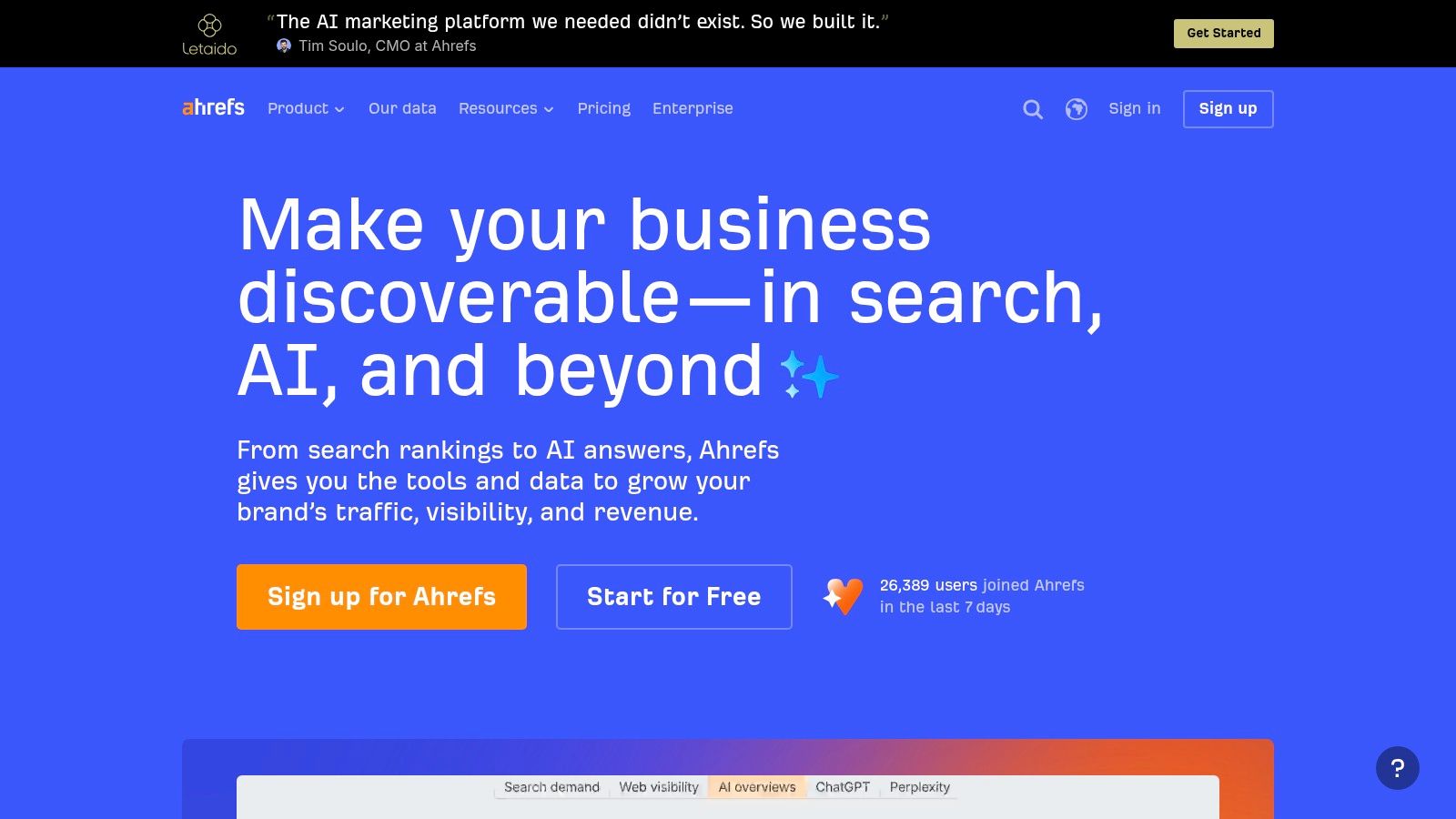
Ahrefs centers on Site Explorer, Keywords Explorer, Site Audit, Rank Tracker, and Content Explorer. Brand Radar and AI prompt tracking sit beside that research, so you can check whether assistants mention a brand while you map the sites that still win classic rankings. A digitalworldinstitute compilation reports that 49% of enterprises pay for both Ahrefs and Semrush to cover data gaps. That split is a buying signal. Use Ahrefs when link and competitor investigation is the job, not when you need every marketing channel in one login.
Fit test: Confirm the engines and prompts your team must watch before you treat AI prompt tracking as full answer coverage.
Pricing and usage limits block smaller teams. Lower plans constrain projects, prompts, and data. Crawl access still matters for being quoted, which is why a correct robots.txt file belongs in the same program as any research suite.
3. SE Ranking
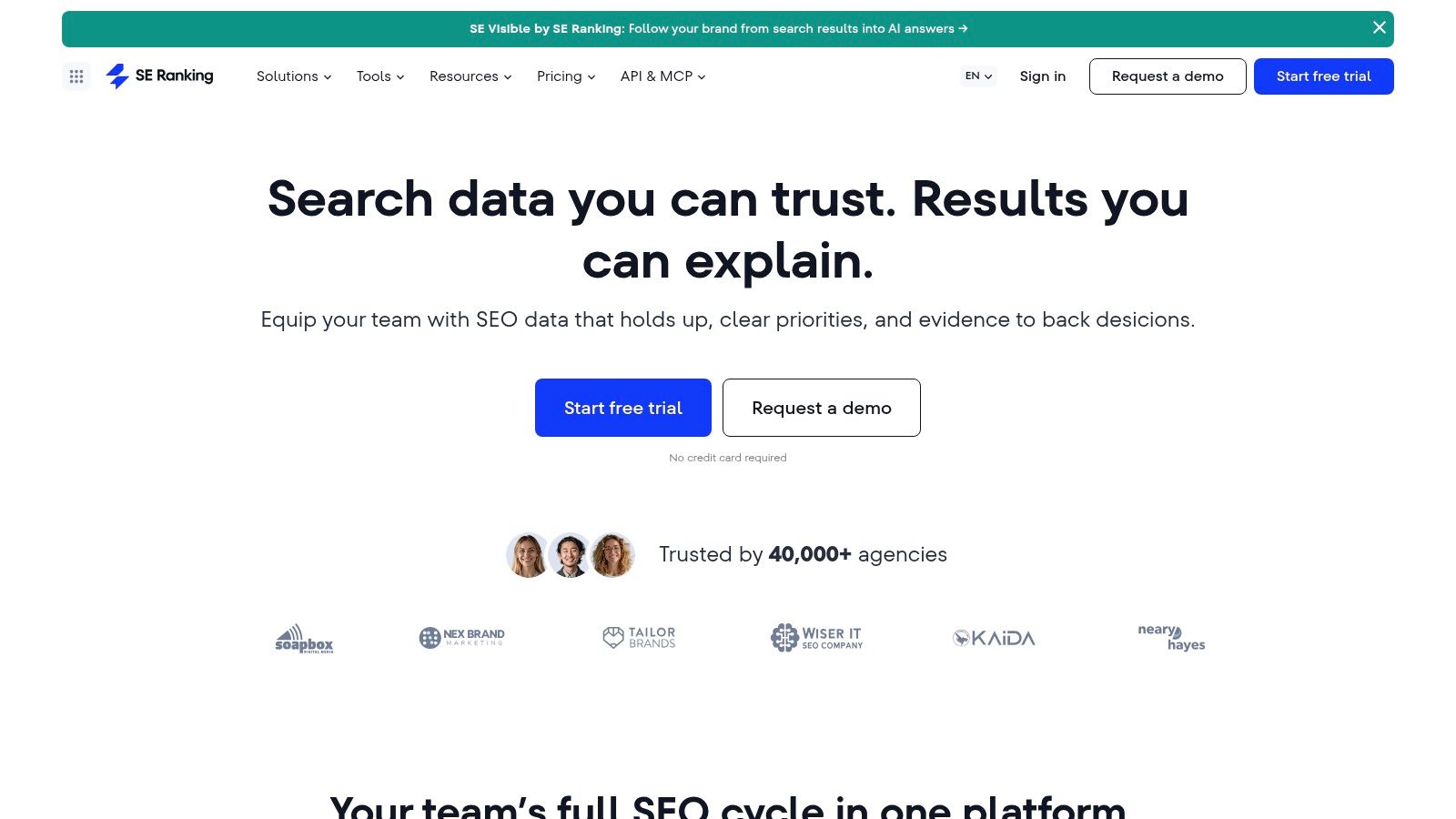
SE Ranking suits teams that want rank tracking, keyword and competitor research, backlinks, audits, content tools, and reporting in one workspace, with GEO features for prompt tracking, AI sources, and AI competitor research.
A Blogging Wizard compilation of HubSpot survey data reports that 60% of marketers use four to six SEO tools. Consolidation pays when the platform exports cleanly into the rest of that stack.
What you run day to day
- Search performance: Keyword research, Google rankings, and competitor research in one project.
- Site quality: Backlink monitoring and technical audits that feed a shared fix list.
- Answer monitoring: GEO features for prompts, AI sources, and AI competitors.
- Agency delivery: Reporting, exports, integrations, and add-ons for client work. Pair the rank view with a search engine optimization dashboard so leadership sees index health and AI mentions together.
SE Ranking offers plans for smaller teams and higher-volume agency use. Limits change by plan. Add-ons raise the bill. GEO tracking is not a bespoke audit of your business questions across every assistant.
4. Moz Pro
Moz Pro is the campaign product for teams that want keyword research, rank tracking, site crawling, and competitor analysis on one dashboard they open every week.
The workflow is campaign-based. You load a site, track a keyword set, crawl for on-page and technical issues, and send branded reports on selected plans. Editors and regional managers get a routine review without living inside a research database. Google's SEO starter guide explains that Google discovers pages through links it has already crawled, while XML sitemaps submit the URLs you consider important, and that structured data can influence breadcrumbs while title links draw on the HTML title and headings. Moz Pro is built to watch that loop: crawl, titles, and rankings in one campaign.
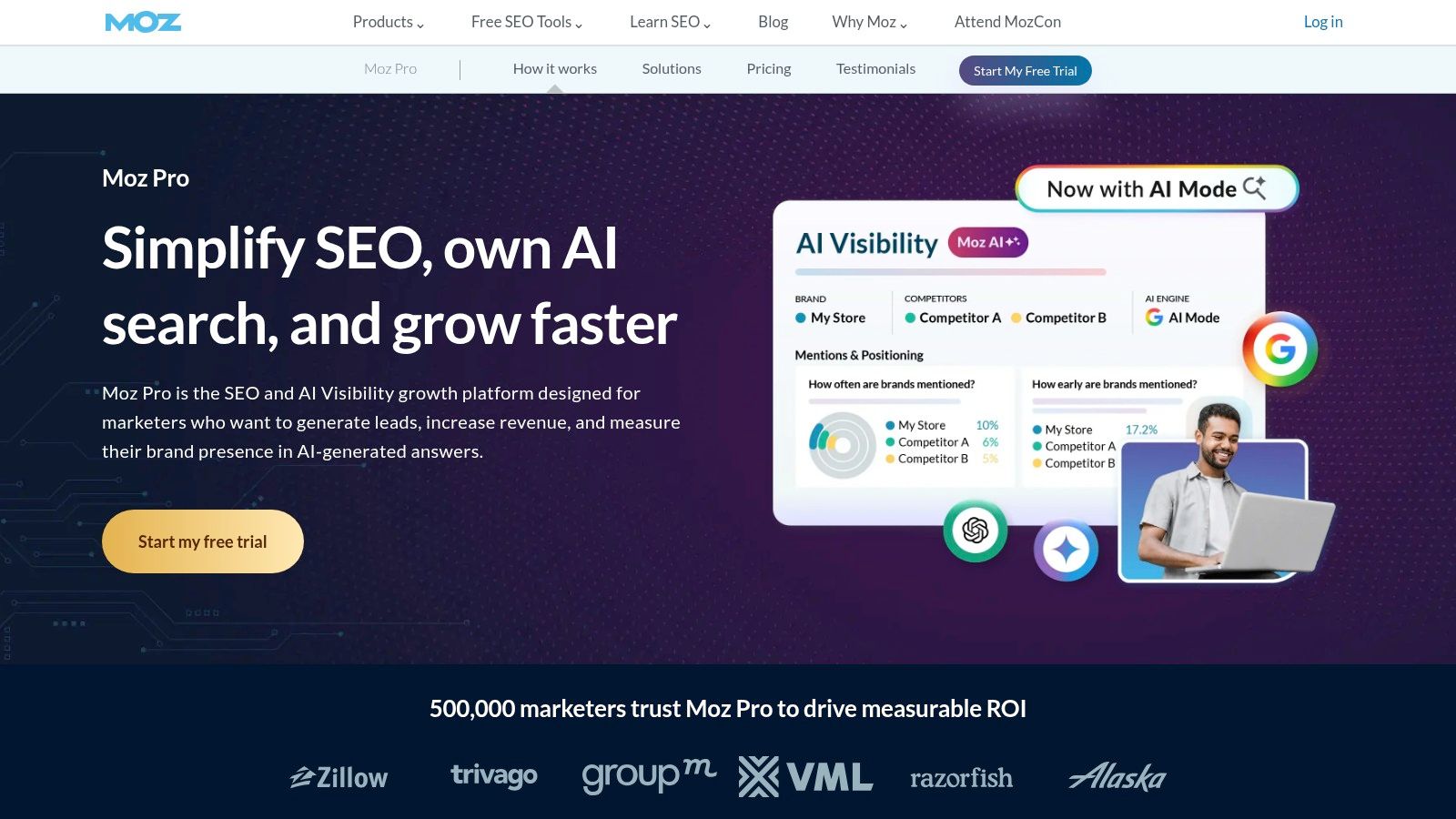
Moz Pro stays focused on conventional SEO. Confirm any AI-search coverage before you treat the product as answer monitoring. Higher volume needs a more expensive tier. Listing management lives in separate Moz Local products, including duplicate-listing discovery, so Moz Pro alone is not a full listings system. Multi-location brands should budget that second product when citations drive local recommendations.
5. Serpstat
Serpstat packages website research, keywords, rank tracking, backlinks, site audits, and competitor analysis, then layers AI Overviews tracking onto the plan lineup.
Plan shape:
- Core research: Keyword, domain, competitor, and backlink datasets for the queries you already fight over.
- Monitoring: Rank tracking and technical audits that show whether a fix moved the page.
- AI Overviews: Keyword tracking for AI Overviews, with higher tiers adding an AI Overview Brand Opportunities Report, ChatGPT and Claude integrations, scheduled reports, and agency controls.
- Capacity: Higher tiers raise project, export, audit, and team limits.
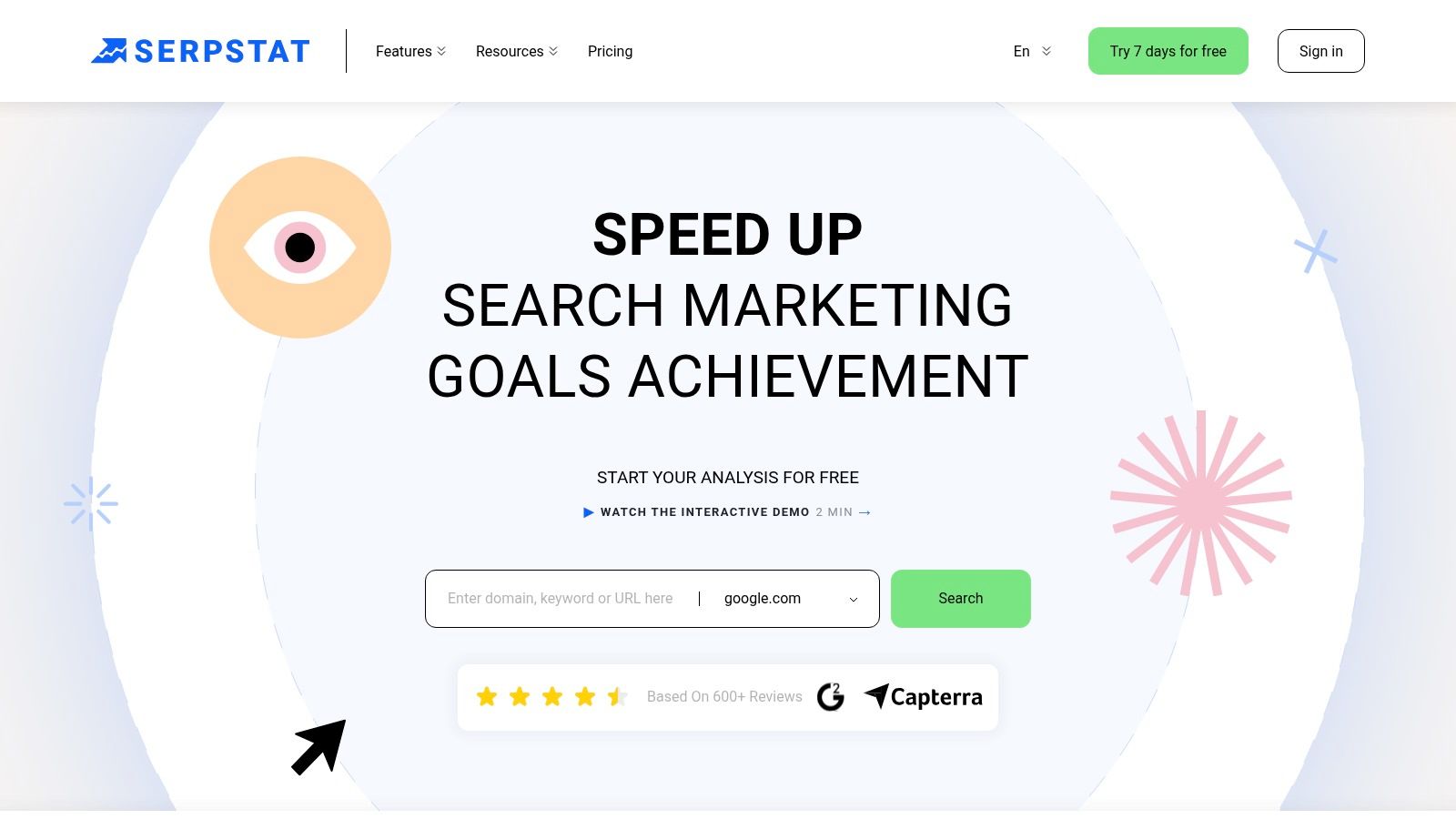
Serpstat publishes annual pricing, so tiers are easy to compare before procurement. That annual commitment is less flexible for a short trial. Search, export, project, and audit limits differ by plan. AI Overview tracking does not measure mentions and citations across a customized set of assistants. It is the right pick when Google's answer modules are the priority and the team still needs classic research in the same login.
6. Mangools
Mangools is the straightforward toolkit for solo marketers, smaller teams, and owners who need useful data without an enterprise learning curve.
Five tools, one login
KWFinder handles keyword ideas and difficulty. SERPChecker, SERPWatcher, LinkMiner, and SiteProfiler cover results, rankings, backlinks, and site metrics. The SEO + AI bundle adds AI Search Watcher Pro, which monitors how AI assistants mention a brand. That pairing is the outcome: you research the query, watch the rank, and see whether assistants name you.
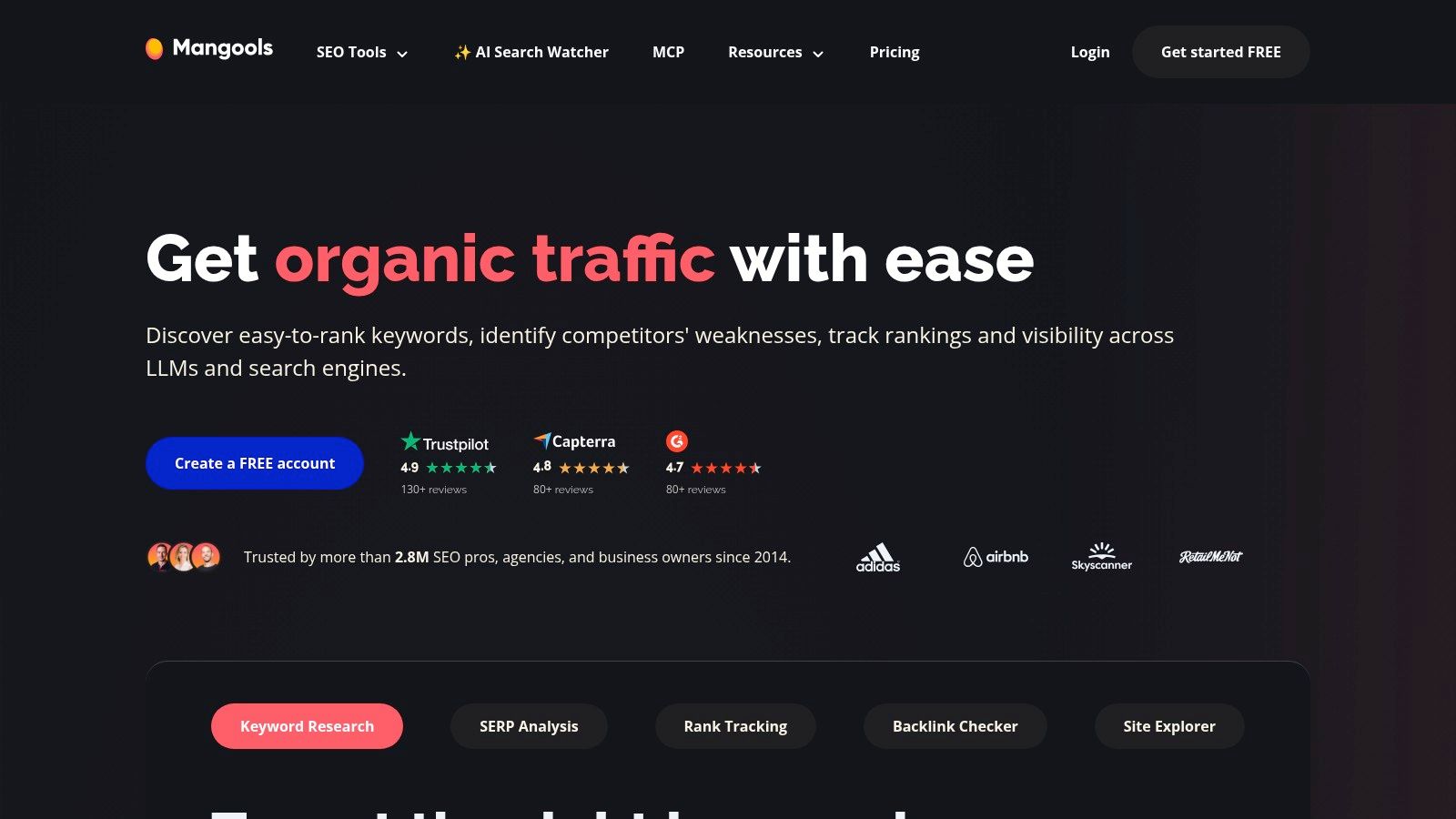
Mangools prices entry plans below several enterprise suites. Plans cap daily research lookups, tracked keywords, seats, and update frequency. The Basic plan has no extra seats. Basic and Premium update ranks weekly. Heavier agency or in-house workflows hit those caps, and large teams will miss the data depth and reporting of a full suite. For a local service brand or a lean SaaS marketing seat, the limit is the feature. You get core SEO plus brand monitoring without buying a platform you will not staff.
Pick Mangools when one marketer owns the work. Move up when several people need daily rank refreshes and deep exports.
7. SpyFu
SpyFu is competitor intelligence first. You see the keywords and advertising tied to rival domains, then add SEO rank tracking, historical data, domain comparisons, and reports.
Where it pays off:
- Rival keywords: Domain comparisons show which terms competitors rank for and which ads they have run.
- Paid and organic together: PPC history sits next to SEO data, so media and SEO share one picture of demand.
- Tracking and exports: Rankings, history, and reports support a weekly competitive review.
- Scale: Higher plans raise data limits, tracked rankings, reporting, and API access. Site auditing and AI-related features are on current plans.
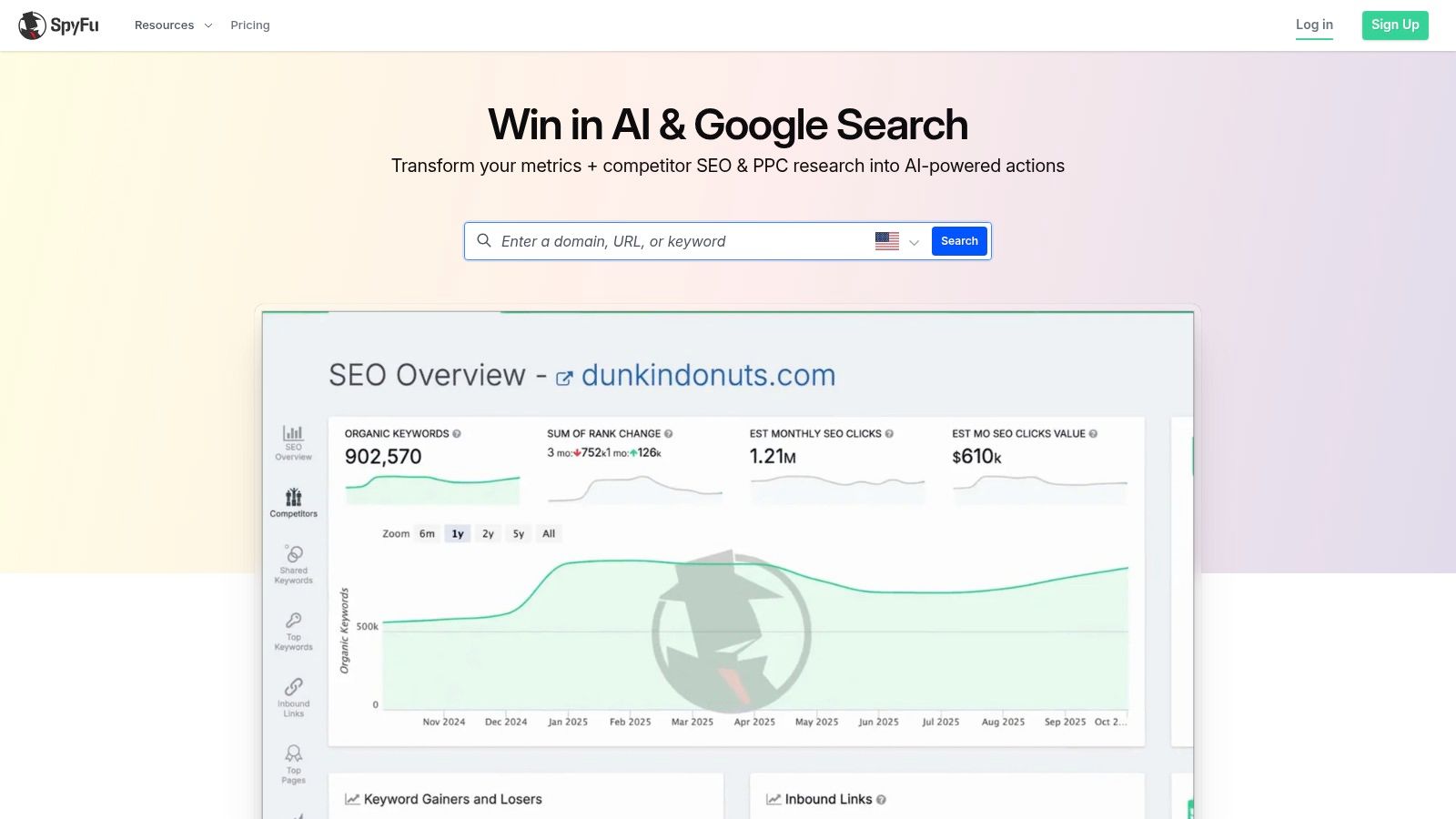
SpyFu offers a free option and accessible paid tiers, which makes it a clean start before a premium suite. Its strength is competitor insight, not site implementation or content production. Paid plans cap results, exports, and tracking. AI brand monitoring or a ChatGPT integration is not multi-engine AEO citation tracking. Use it to learn who owns the category in search and ads. Measure whether assistants name your business with a separate baseline.
All-in-one SEO platforms at a glance
| Platform | Core Strength | AI Visibility Features | Best For |
|---|---|---|---|
| Semrush | Broad SEO and marketing toolkit with keyword, competitor, backlink, and site audit tools | AI visibility reporting through Semrush One or a separate toolkit | Teams combining traditional SEO with local, advertising, and social marketing |
| Ahrefs | Competitor organic traffic, keyword, and backlink research | Brand Radar and AI prompt tracking | Teams focused on competitor and link-profile analysis |
| SE Ranking | All-in-one SEO workflows, reporting, and agency tools | LLM prompt tracking, AI-source tracking, and AI competitor research | Teams seeking broad SEO tools with AI-search monitoring |
| Moz Pro | Campaign-based keyword tracking, site crawling, and SEO reporting | AI-search coverage is limited or should be verified | Teams seeking a consolidated dashboard for routine SEO monitoring |
| Serpstat | Keyword, competitor, backlink, rank tracking, and site audit tools | AI Overviews tracking and higher-tier AI research features | Teams wanting broad SEO research with AI Overview reporting |
| Mangools | Straightforward toolkit for keyword research, rankings, backlinks, and site analysis | AI Search Watcher Pro monitors brand mentions by AI assistants | Solo marketers and smaller teams with moderate data needs |
| SpyFu | Competitor keyword and advertising research | AI-related capabilities are available, but multi-engine citation tracking is limited | Teams focused on competitor intelligence across SEO and paid search |
From Software Stack to Being Named in the Answer
Most of these platforms track AI mentions only in part, and none runs a custom baseline of your own customer questions across ChatGPT, Perplexity, Claude, and Google AI Overviews. That baseline shows whether the engines name your business when prospective customers ask for recommendations.
A Semrush study on the operational gap found that only 22% of marketers report SEO and AI-search efforts fully integrated across strategy, execution, and reporting. 49% identify AI's effect on pipeline or revenue as a major measurement challenge, and only 9% say they can measure all relevant metrics. The study also notes that Google says overall organic click volume has remained relatively stable while average click quality has increased. Click totals alone do not show whether AI assistants recommend your business.
Use an all-in-one SEO suite for rankings, crawl health, links, and competitor research. Add AEO measurement to see which businesses AI assistants cite in response to your customers' questions, and what to change. AnswerLion's process is Audit, Fix, and Track: it establishes a baseline across major AI engines, identifies missing or inaccurate details, and prioritizes fixes. Answer-first pages lead with a direct response, while schema, crawler access, and an llms.txt file help engines understand the business. Authority work addresses listings and third-party references.
Google's title-link documentation says Google must recrawl and reprocess a page before recognizing title updates, a process that can take from a few days to a few weeks. AEO changes can also appear after AI engines recrawl a site, often within weeks, while authority building compounds over time. SEO helps a page appear in search results; AEO helps get the business named in the answer itself. Use both: your SEO suite supports the foundation, while AEO measures and improves visibility in AI answers.
AnswerLion audits how ChatGPT, Perplexity, Claude, and Google AI Overviews describe your business, then improves priority pages, adds structured data, and tracks citations over time. For a documented baseline showing who gets named instead of your business and a prioritized fix list, visit AnswerLion.